Back to the home page

10 Mistakes to Avoid If You Plan to Rent Your Property

Is it really easy to consider renting your property without a real estate agency to assist you?

Due to the current economic situation, access to property ownership has become increasingly restricted for the Belgian population. Inflation has affected all macroeconomic areas of society, and real estate is no exception. Purchasing power has decreased, and mortgage rates have risen, preventing many families from investing in property. As a result, we have observed an increase in individuals wishing to rent a property while they save up for a potential purchase. Property owners who do not wish to sell at the moment and prefer to wait for a change in the economic context are venturing into the rental market. In this article, Trevi discusses the 10 pitfalls to avoid when renting your property for a hassle-free experience.

The 10 Mistakes to Avoid When Renting Your Property

  • Unfortunately, this is a very common mistake. Many property owners do not have enough knowledge of the current real estate market to estimate the monthly rent for their property accurately. In Brussels, in the current economic climate, an overestimation of 30 to 40% above the market rate is not uncommon. Souheil Marso, head of the rental department at Trevi, mentions properties known as “burned” that find no takers because they are priced significantly higher than similar accommodations. As a result, when the owner eventually decides to lower the price, it may be too late, and the property might end up being rented for less than its true value.
    Estimating the value of a property is a complex task that varies and evolves constantly depending on the region, economic context, building, and nearby amenities. It requires careful attention to find the right price and avoid “burning” the property before finding a tenant. Trevi relies on top real estate experts to offer property owners a fair estimate to secure a quick tenant.

  • You might think this is the easiest thing to do, and all you need is to highlight your property to attract tenants. However, be careful not to break the law! Souheil Marso reminds us that mentioning the PEB score (energy performance certificate) of your property is mandatory in all real estate ads. If you do not have an energy certificate or if it has expired (reminder: after 10 years), you will need to hire an expert to issue a new one. This is particularly essential in the current economic context, as the indexing of certain properties is frozen if they have a poor EPB score. Remember, here is the relevant information that could potentially be extended:
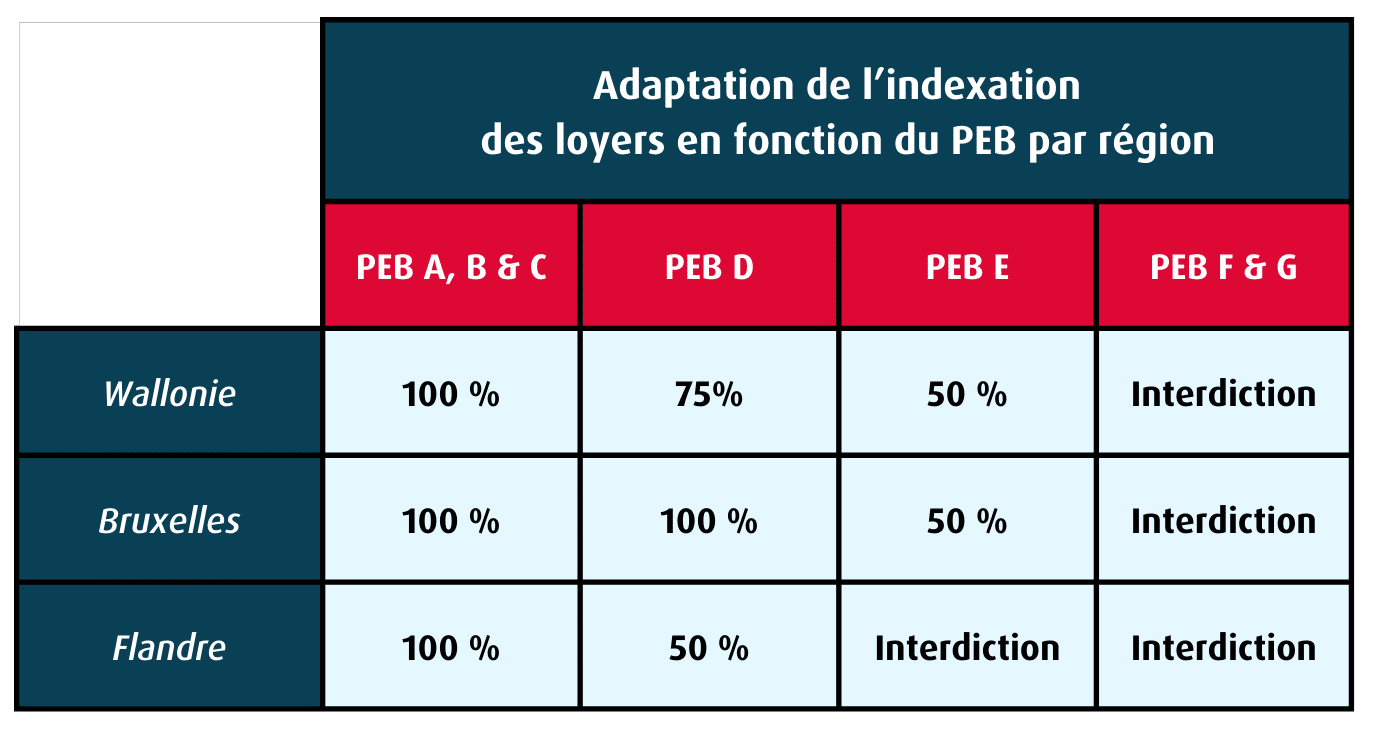
    The amount and nature of the common charges, if any, must also be mentioned in the real estate ad. It is illegal to mention certain types of profiles that you would prefer to have (e.g., “single, no children”) as you could be accused of discrimination.
    According to Souheil Marso, here’s what you should add to your ad in addition to the EPB score, rent, and common charges:

    • The size of the property so that tenants know what to expect, along with the number of bedrooms.
    • The amenities the accommodation offers, such as a equipped kitchen or a washing machine.
    • The features that interest tenants, such as a large terrace, ample natural light, etc.

    However, don’t reveal too much; it’s essential to strike a balance and provide relevant information that gets straight to the point. Of course, this task becomes more manageable with a real estate agency that knows how to draft an ad considering the law, regional specificities, and has a vast network of potential tenants eagerly waiting for your property.


  • Most potential tenants are available to visit a property after their workday, so it is essential to have flexible time slots to accommodate everyone. Additionally, it is better to prioritize individual visits to get to know the person and not be overwhelmed by a constant stream of visitors. Planning visits will obviously take time, but it will help you find the right tenant. At Trevi, we take care of visits for our property owner clients to relieve them as much as possible, and we then submit them with serious and complete applications that we have received.

  • Having an application file with all the necessary information is particularly important for a quality rental process. However, a landlord cannot demand whatever they want from a potential tenant. For example, as Souheil Marso points out, “the landlord is allowed to request proof of income from the potential tenant, but they cannot demand the last 3 pay slips and/or an employment contract. The potential tenant is free to prove their income as they see fit.” This can complicate matters for individual landlords who may end up facing fake documents that only professionals can detect due to their experience. At Trevi, we regularly encounter forged pay slips and can provide advice if needed.

  • The lease writing is a step to focus on to protect both the tenant and yourself. To be valid, a lease must include certain provisions; in Brussels, for example, a reference rent based on an official database must be included in the lease. Additionally, there are notable differences in the notice periods depending on the type of lease. For instance, the landlord could end up paying taxes if they choose, for example, a furnished primary residence lease. It is essential to inquire beforehand.
    Trevi is fortunate to be able to rely on experts, including a legal department that continuously updates rental contracts. Therefore, the landlord has nothing to worry about.

  • You may not know this, but it is prohibited to request a cash rental guarantee from a potential tenant. Furthermore, with a rental guarantee in a blocked account, you cannot demand more than 2 months’ rent as a deposit. This so-called “classic” 2-month guarantee can be deposited at a bank or on the SPF Finances website, but it is not the only type of rental guarantee that exists. Therefore, it is essential to have all this information in mind before starting and it might be wise to seek advice from an expert.

  • Yes! If you do not conduct a move-in inspection with the potential tenant, it will work against you at the end of the lease. Without a move-in inspection, the outgoing condition of the property will be considered the same as the entry condition. This means that if your tenant broke a door or your oven during the lease, you will not be able to prove that they were in perfect working condition at the beginning of the lease. A comprehensive move-in inspection must be detailed and accompanied by photos; simply stating “kitchen in good condition” is not sufficient, as Souheil Marso points out. Ideally, the move-in inspection should be conducted before the move-in or at most 1 month after. It can be done by an expert with the costs shared between both parties or done amicably. Each party can also call in their expert. Therefore, there are several ways to proceed, and it can sometimes be challenging to navigate.

  • Not at all! In reality, signing the lease is extremely important. All necessary documents must be included:

    • Energy Performance Certificate (often sent to the tenant in advance for review).
    • Housing code annexes.
    • As many copies as there are parties involved.
    • Any other annexes required for the lease (e.g., internal rules and regulations, if any).

    “A recurring problem at this stage is the lack of annexes in the lease, even though they are required,” emphasizes Souheil Marso. You can check what you need to provide on the Bon Bail page. At Trevi, we always ensure that the lease provided to tenants and property owners is compliant and complete to avoid future issues.

  • Indeed, if you do not ensure that everything has been respected by the potential tenant before handing over the keys, you could find yourself in a vulnerable position if certain clauses are not followed. Therefore, you must ensure that these points have been fulfilled beforehand: the rental guarantee has been constituted, the move-in inspection has been completed, the first month’s rent has been paid, and the tenant has taken out home insurance.

  • Registering the lease is mandatory within two months of its start date, and this obligation falls on the landlord. This registration is done on the SPF Finances website and is completely free. However, if you fail to do so, your tenant could leave your property without notice or compensation to provide. You can find this information in the “Enregistrement contrat de bail” section of the SPF Finances. At Trevi, the real estate agents always take care of registering the lease, respecting the measures and deadlines in force.

A More Complex Journey Than You Might Think

As you can see, renting your property alone can sometimes become a real ordeal with various legal specificities to respect, mandatory modalities, and pitfalls to avoid. Talking to a professional could, therefore, save you many headaches in the long run. Trevi has a team of agents in its rental department who put their skills at the service of property owners. Their goal? Taking care of the property owners’ rental process and serving as an intermediary and mediator between the landlord and the tenant.

Need some advice?

Don’t hesitate to contact us to arrange a meeting at your earliest convenience.